Next.js vs WordPress: Which Is Better for Your Business Website in 2026?
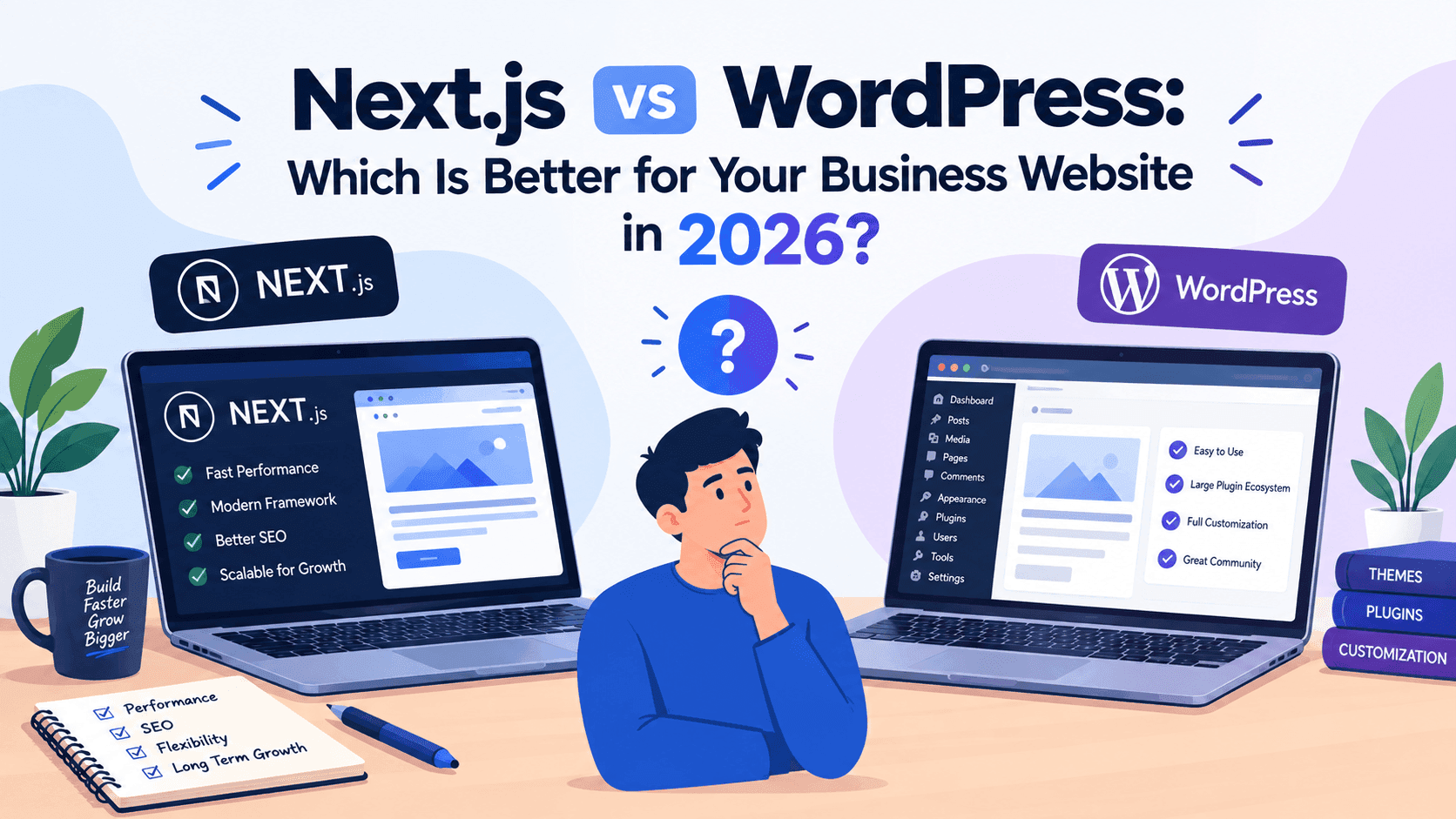
"Should I use WordPress or should I get a custom website built?" — this is one of the most common questions business owners ask before starting a website project, and honestly, both sides have valid points. Here's an honest breakdown, without the bias one direction or the other usually comes with.
The Quick Answer
If you need a simple website up fast, with a small budget, and you'll be editing content yourself often — WordPress is still a solid choice.
If your website is core to your business (a SaaS product, a platform with logins, real-time features, or anything performance-sensitive), a custom-built Next.js site will serve you far better long-term.
Now let's look at why.
Speed and Performance
This is where the gap is the biggest. WordPress sites, especially ones loaded with plugins, tend to get slower over time — every plugin adds extra database calls and script loading.
Next.js is built by Vercel specifically for performance: it can pre-render pages at build time, stream content, and optimize images automatically. A well-built Next.js site will almost always load faster than an equivalent WordPress site, especially on mobile.
Since Google uses page speed (Core Web Vitals) as a ranking factor, this directly affects your SEO too.
SEO
Both platforms can rank well — SEO ultimately comes down to content quality and backlinks more than the platform itself. But there are technical differences worth knowing:
- WordPress relies heavily on plugins (like Yoast or RankMath) to manage meta tags, sitemaps, and schema markup.
- Next.js gives developers direct control over metadata, structured data (JSON-LD), and rendering strategy — nothing is hidden behind a plugin's settings panel.
For a technical business or SaaS product, that direct control usually wins out.
Cost
WordPress is cheaper to get started with — hosting is inexpensive, and there are thousands of ready-made themes.
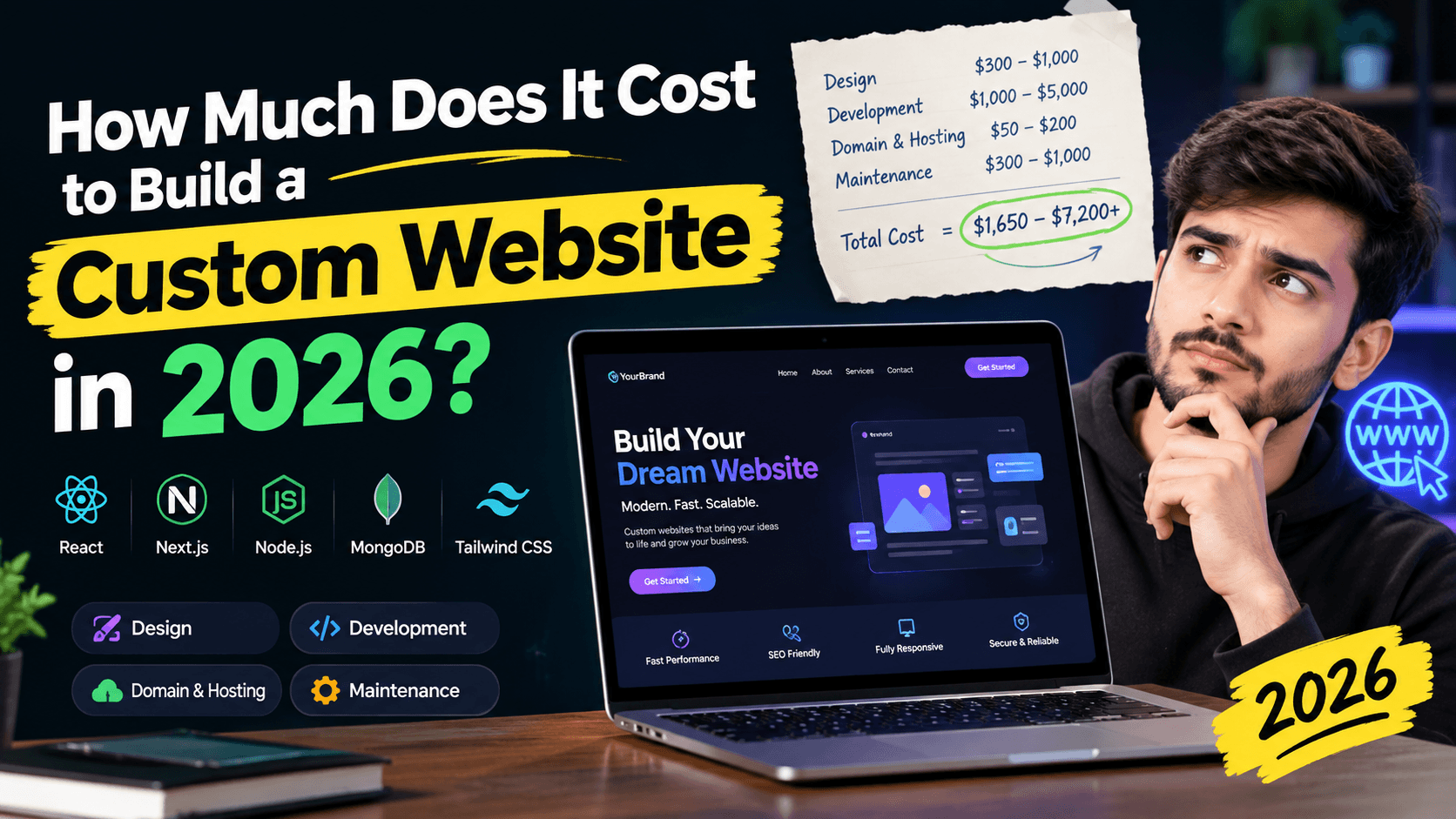
Custom Next.js development costs more upfront because it's built specifically for your business, not adapted from a generic theme. But it usually costs less in the long run, because you're not paying for premium plugins, security patches, or performance fixes every few months.
Maintenance and Security
WordPress's biggest weakness is also what makes it accessible: plugins. Every plugin is a potential security vulnerability, and WordPress sites are a common target for automated attacks specifically because they're so widespread.
A custom Next.js application has a much smaller attack surface — there's no plugin ecosystem to patch, and dependencies are managed directly by the developer.
When WordPress Still Makes Sense
To be fair, WordPress isn't going anywhere, and for good reason:
- Simple brochure/portfolio sites with infrequent updates
- Blogs run by non-technical content teams
- Very tight budgets and timelines
When Next.js Is the Better Investment
- SaaS products and web applications
- Sites with custom user accounts, dashboards, or real-time features
- Businesses that plan to scale traffic significantly
- Projects where page speed and SEO performance directly affect revenue
The Real Answer
There's no universally "better" platform — there's only the better platform for your specific situation. The mistake most businesses make is picking a platform based on what's popular, instead of what their project actually needs.
Not sure which direction is right for your project? Feel free to get in touch — I work with both WordPress and modern stacks like Next.js and the MERN stack, and I'm happy to give you an honest recommendation based on what you're actually trying to build.